

How To Protect Charcoal Drawing From Smudging
Charcoal cartoon is a deeply satisfying medium. It could be considering they're and then quick to complete, with immediate results, or that the final await is so impressive. Either mode, people dear charcoals. Even the great Michelangelo created a collection of charcoal drawings.
Simply there are sure charcoal drawing techniques you demand to know before embarking on your offset masterpiece. This guide takes you through some key charcoal drawing tips and tricks to assistance you to begin successfully. Spotter the video below, then follow the steps to success.
For more help with your creations, see our tutorials on how to draw, or investigate diverse art techniques. And for more kit, see our pick of the all-time sketchbooks around.
Y'all tin use any type of charcoal to try out these techniques. Just enquire at your local art shop and they will guide yous (see point #09 for a little about different types). If this inspires you to educate yourself further, why not head over to our online art courses roundup to observe courses, workshops and more.
All the charcoal drawing techniques you need to know
01. Discover the essence
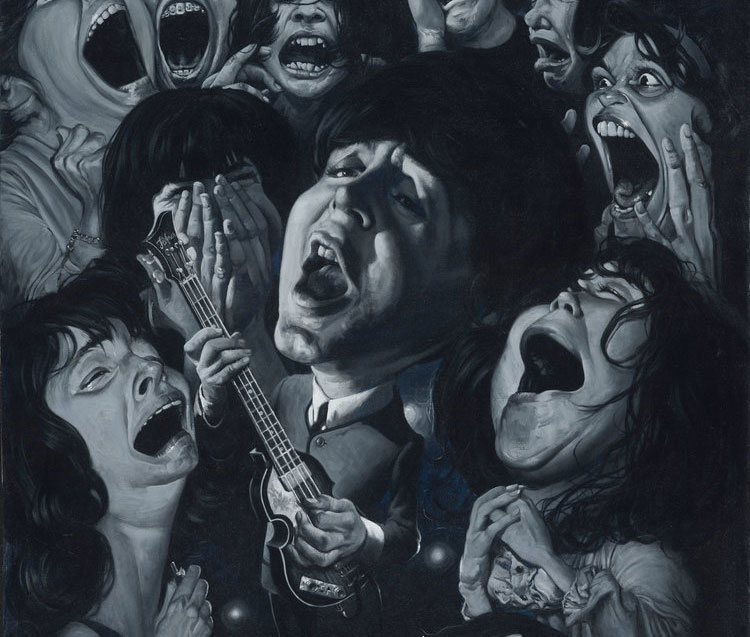
The chief thing is to keep the chief thing the main thing. Artistically speaking, the main matter is chosen the essence. It's as important in charcoal cartoon equally information technology is in any other medium. When creating a slice, the need to establish what the image is virtually, and what you lot want to say with it. Once y'all settle on the 'main idea' or the essence, everything you practice from that point on, every move and every detail you put in or leave out, should work to strengthen that attribute of the piece.
02. Learn the value of value
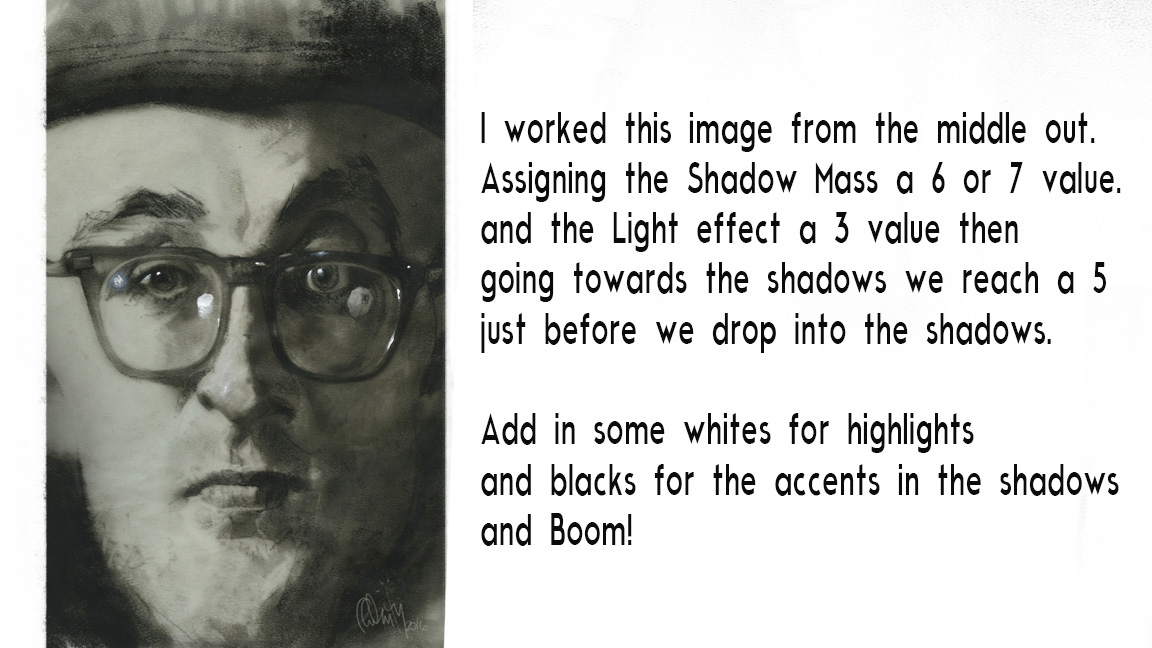
The give-and-take 'value' gets thrown around a lot in art, and can seem confusing. What nosotros mean by 'value' is but a walk from white to blackness (light to dark), on a range of i to 10. I is the white of the page and 10 is black, then a five, l per cent or 'halftone' is a medium greyness, halfway between white and black. Every image is composed of values (darks or lights), regardless of colour.
To help you lot with this, work from the middle out, keeping your darkest night (the shadows) no darker than a value of six or seven, and your lightest (the light effect or everything in the light) a 3 or 4 value. Piece of work your style towards the darks (accents) and your whites (highlights).
Think of accents and highlights as twins living in different neighbourhoods. They are not the most important chemical element of your image. They serve the whole.
03. Use the hierarchy of value
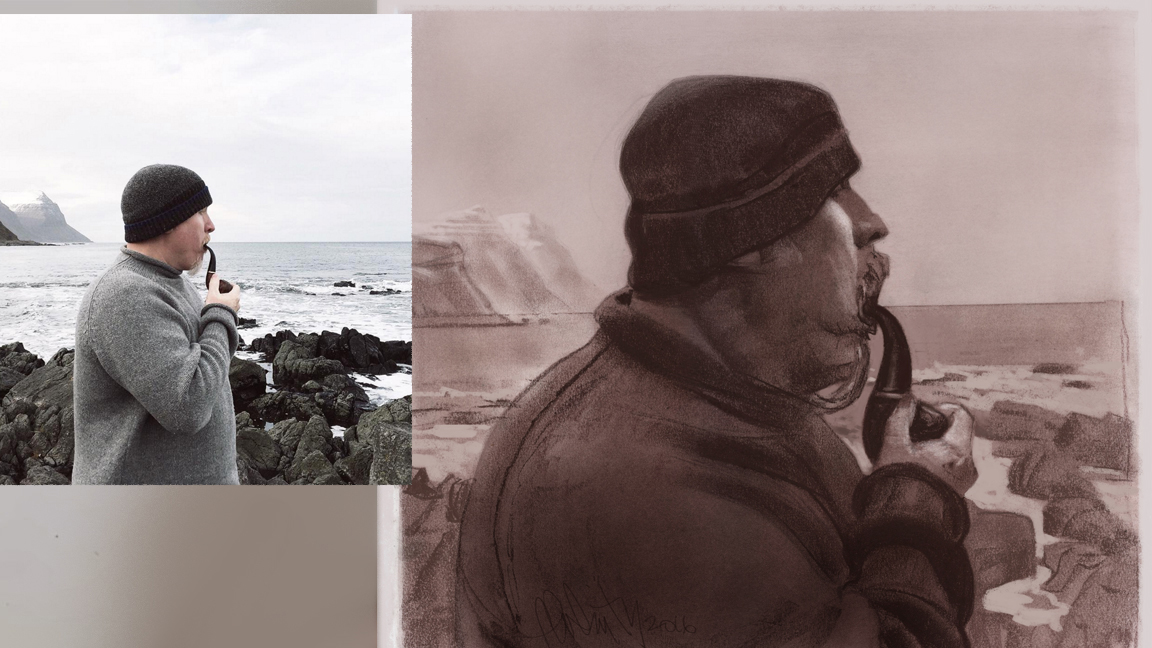
It'south condom to say that a successful paradigm is one that rapidly reads well and has power to touch you lot emotionally. Using value or tone and assigning different areas of your charcoal drawing to lesser or darker tones tin be a very helpful tool.
In the image above, based on a photograph by Josiah Bice, the darkest values are used on the subject. Notice the lightest value on his cheek and the darkest value reserved for the mass of his torso.
Using a hierarchy of value allows you to direct the viewer to what you want them to see first. In this case, it's Steve smoking his pipe. Everything else becomes less of import. He is the essence of the epitome.
04. Squint
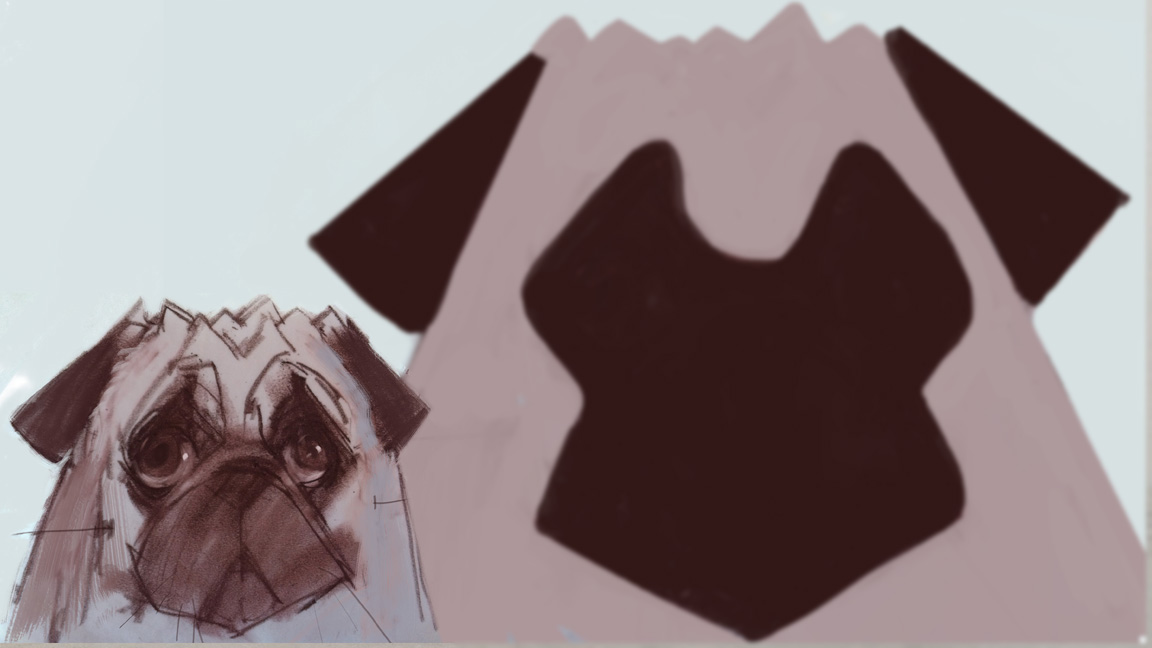
Sometimes 20/twenty vision is non helpful. When we observe any we are drawing at that place is a ton of information going in through the eye gate. And an image filled with needless details cripples the effect of a slice. The goal is to edit and simplify.
Squinting our eyes just a bit (or perchance taking your spectacles off) will mistiness the image's values and assist us meet a more simplified version of what nosotros are looking at overall. Squinting also helps the states run into simple shapes very clearly. Nailing those simple shapes helps with the overall essence of the piece.
05. Explore thick and thin lines
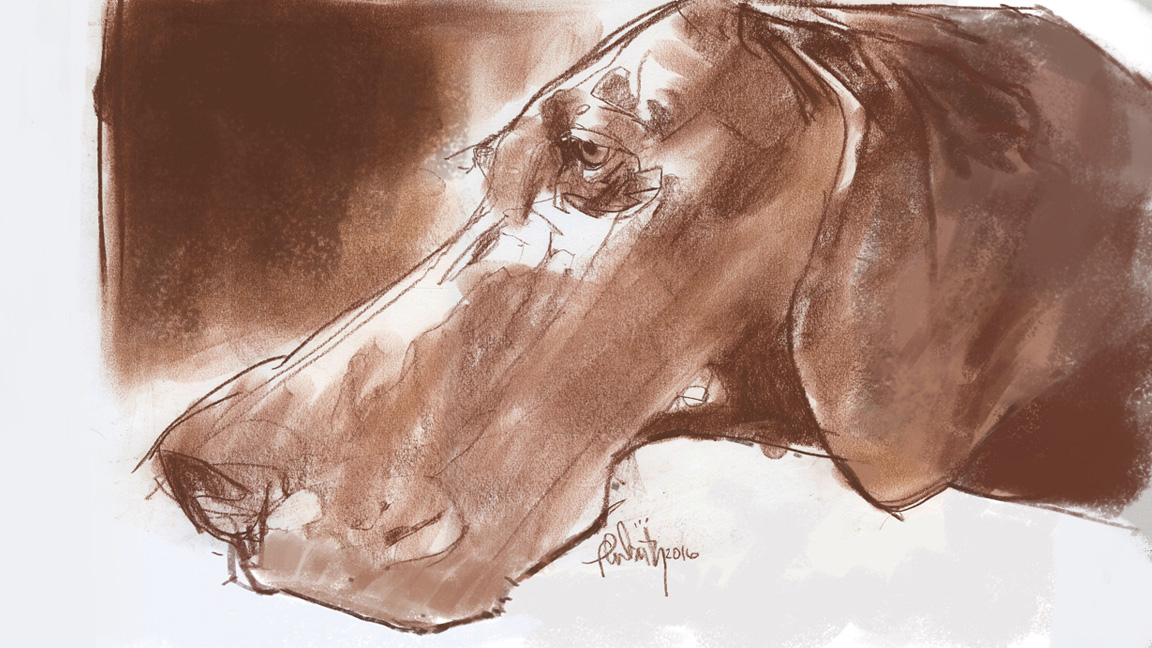
Using thick and thin lines is an interesting idea, and it's funny how many artists miss this very helpful technique in their work. In a charcoal drawing, if every line has the same width or is fatigued using the aforementioned exact pressure, information technology ends upwards looking like a colouring book cartoon and can come across as very monotonous and boring. Using thick and sparse lines in your drawing can make information technology then much livelier.
Then how do you apply this technique, and what do you need to know? The rule of thumb is that lines on top of things are thinner since low-cal is hitting them and lines underneath objects can be thicker since there are usually shadows sitting there. That's it. Elementary, right? Bank check out the diverse dancing lines and thickness on the canis familiaris drawing above. Now y'all know.
06. Utilise an eraser
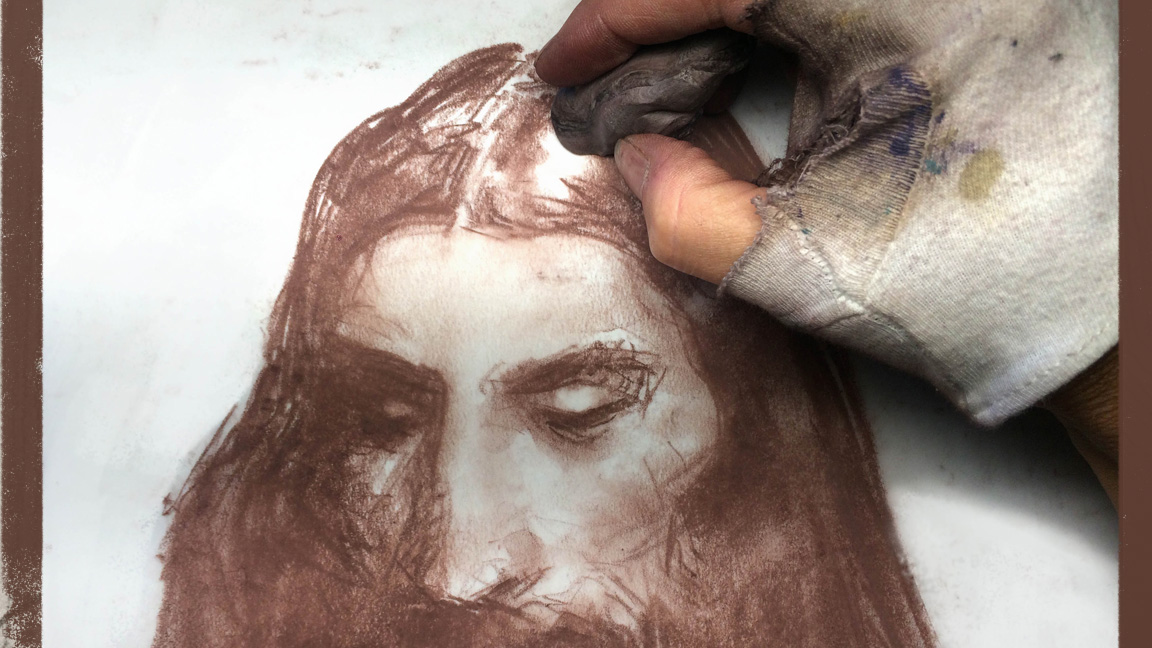
The cool thing about charcoal is that it'south easy to control. You can move it around easily. Once you lot apply charcoal you can remove it or erase it where information technology'due south non needed. In the pic to a higher place, the erased role marks out where the light is hitting the model's head.
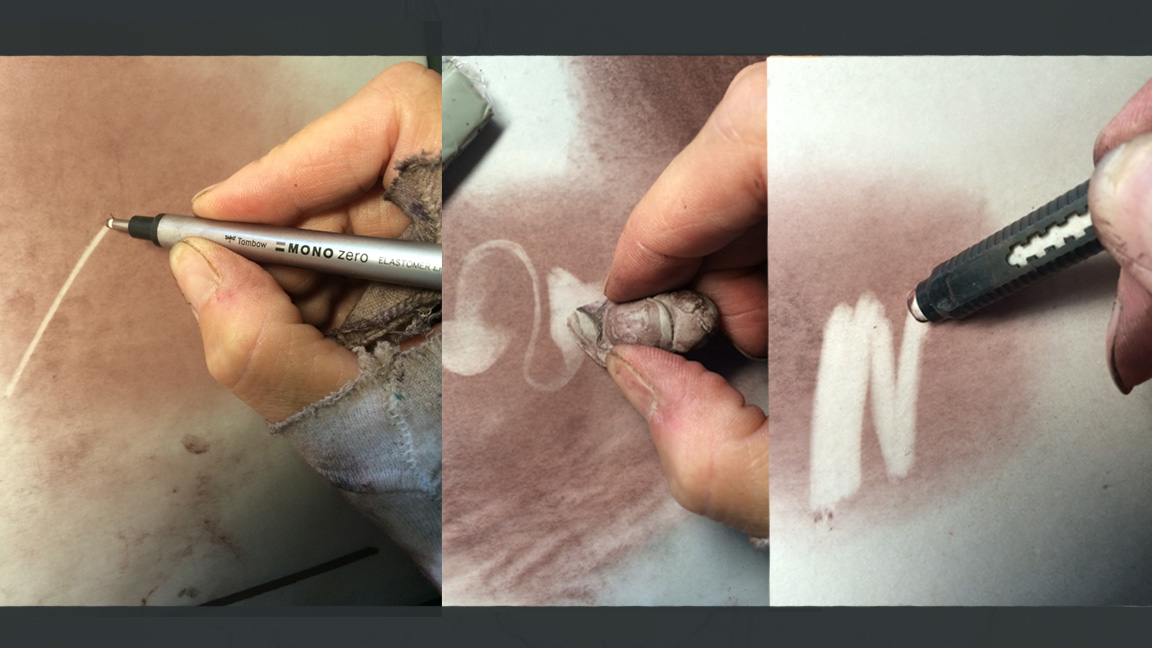
Traditional artists have plenty of tools of the merchandise to cull from, and the tools for creating charcoal drawings are particularly cool. The paradigm to a higher place shows some bang-up ones: a really small fine-line eraser, a kneaded eraser that you can bend and squash, and a hardcore eraser pen for those tough, heavy lifting erasing jobs.
Using charcoal or pastels requires the states to 'movement' or apply the medium, and in that location are many ways to accomplish this. Your finger is the most obvious, withal tin be streaky or also small. A Webril Wipe is a great tool for making a large mass of charcoal in one stroke.
08. Wear a glove
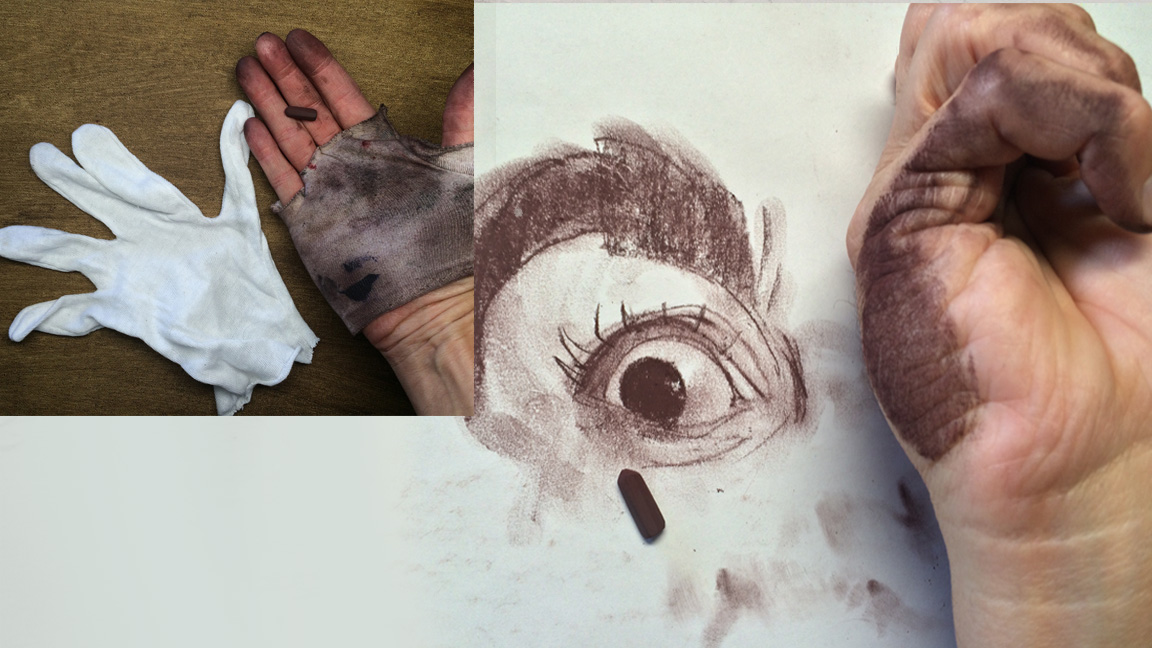
Did you know that your hand has oils on the surface that tin can damage the purity of your newspaper or stock and fight against yous? The oils on your mitt can even attach to your paper and repel your medium. To solve this problem, wear a glove or identify another piece of paper under your manus to protect your artwork.
09. Effort charcoal pencils
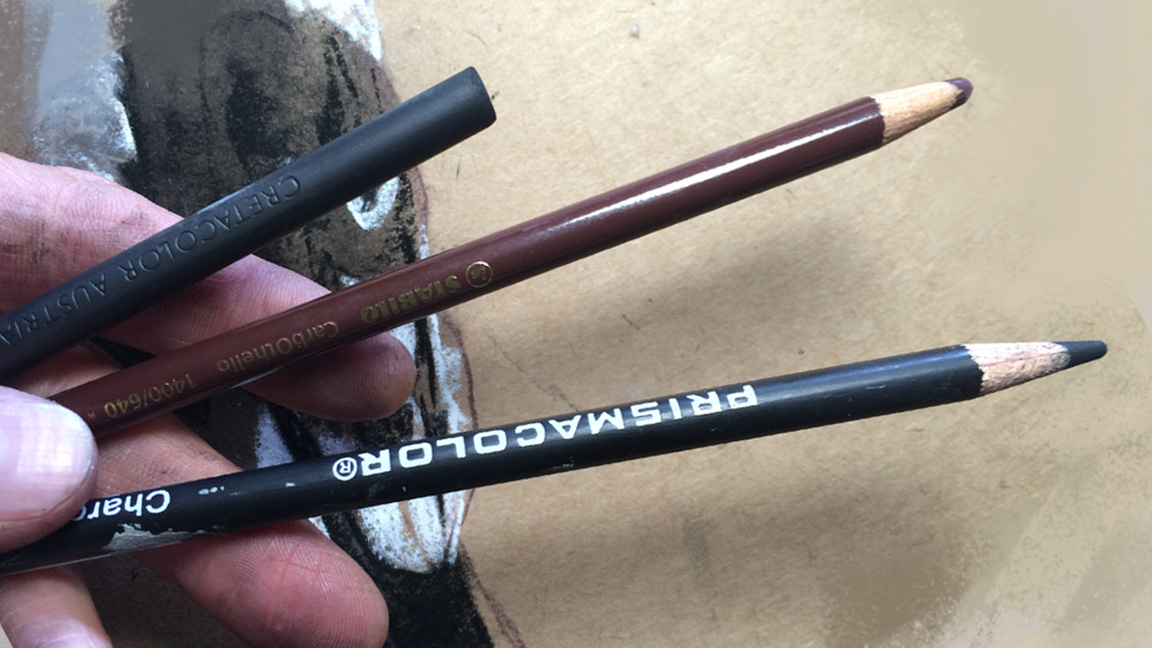
Charcoals come in many forms, from pencils to thick sticks to chunks, and the specific medium y'all determine to use is up to you lot. In the above photo are three good examples of charcoal pencils. Know that they can be messy, so subsequently using them, information technology's worth spraying your charcoal drawing with a workable fixative to control them.
10. Press on
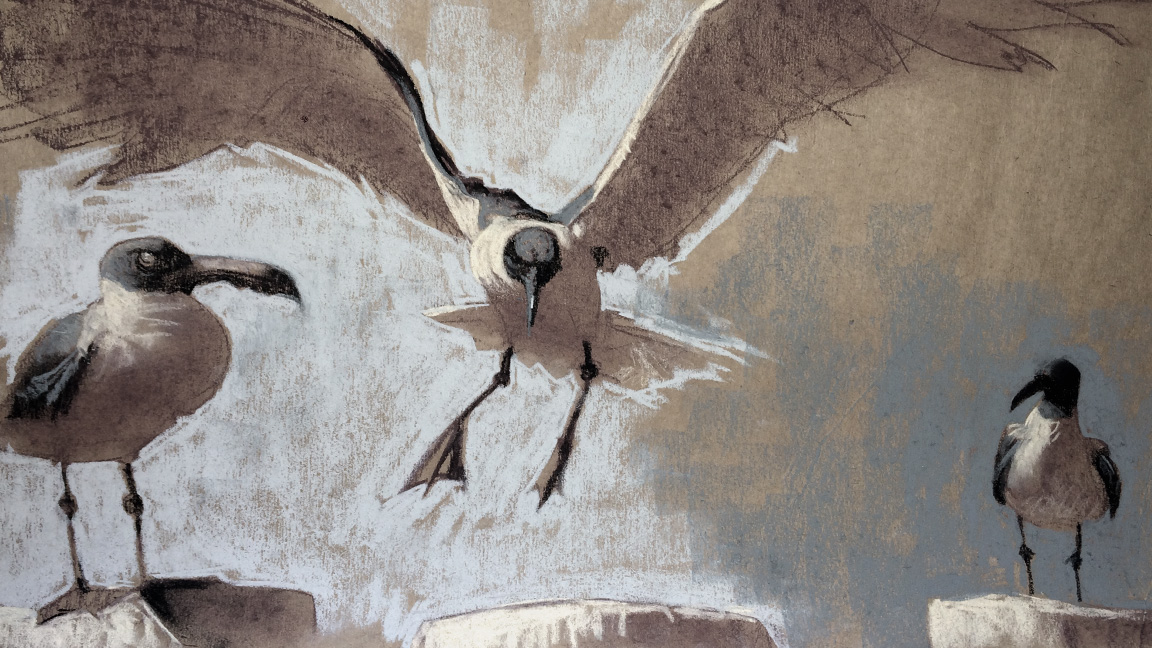
Remember that drawing is difficult and at times frustrating. Stick at it. Creating art is extremely hard to pull off and it can take time to feel happy virtually your progress.
Learning and growing is a community projection. Reach out and network with a few artists you lot admire. Exist humble and teachable and ask them for insights virtually your work. Ask 'What are my weaknesses?' and 'Where should I get-go or what should I focus on?' Ask them to be honest. Those are skilful questions and a great place to beginning.
The expert thing is that everyone has been downward in the dumps at some indicate. Even to experienced artists notwithstanding have actually discouraging days total of doubt, and others where they can fly! So press on, open your wings, bound and take hold of the wind.
Related articles:
- Essential art supplies for painting: All you need to commencement creating art
- Must-know painting techniques for artists
- Best art easels: Detect the perfect easel for your art

Source: https://www.creativebloq.com/advice/charcoal-techniques-12-expert-tips
Posted by: alexanderthowas1943.blogspot.com
0 Response to "How To Protect Charcoal Drawing From Smudging"
Post a Comment